



Emerging studies on benefits of probiotics.
Probiotics-COVID-19: Researchers from Department of Food and Nutritional Sciences, University of Reading-UK and Department of Sport Science, Sport, Health and Performance Enhancement Research Centre, Nottingham Trent University-UK have in a new study demonstrated the role of the gut microbiome in COVID-19 and also the benefits of probiotics for both as adjuvants and also as prophylactics.
The ongoing SARS-CoV-2 pandemic has altering the face of science and medicine, social interaction and public health worldwide. It has had a destructive effect upon millions of people and is approaching a devastating 1.3 million fatalities. New emerging evidence has suggested a link between the infection and gut microbiome status. This is one of several factors that may contribute towards severity of infection. Given the fact that the gut is heavily linked to immunity, inflammatory status and the ability to challenge pathogens, it is worthwhile to consider dietary intervention of the gut microbiota as means of potentially challenging the viral outcome. In this context, probiotics and prebiotics have been used to mitigate similar respiratory infections.
In this study the researchers summarize links between the gut microbiome and COVID-19 infection, as well as propose mechanisms whereby probiotic and prebiotic interventions may act.
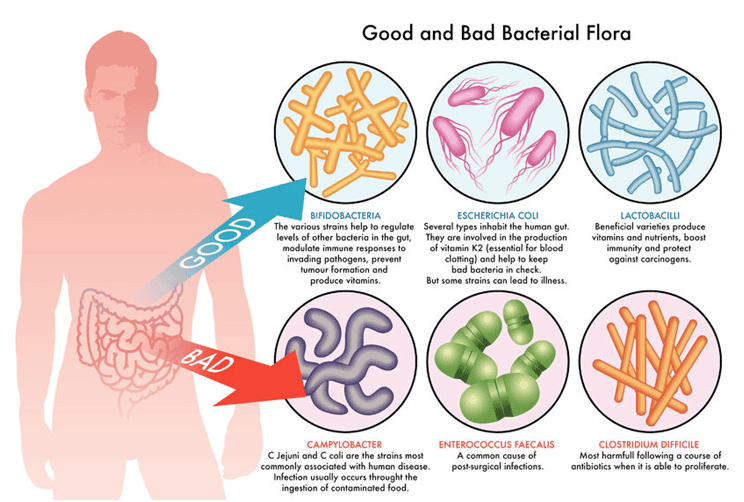
According to the research team, the different components of large intestinal microbiota may be considered as exerting potentially health-promoting or pathogenic effects. In the gut, resilience is connected to the functional core microbiota. View more.
There are several mechanisms whereby the gut microbiota may influence viral transmission and disease progression. In relation to initial infection, a past study compared the faecal microbiota of 15 COVID-19 patients to healthy controls. View more.
When focusing on the microbiota of the 7 antibiotic naïve COVID-19 patients on admission to hospital, microbial sequencing revealed elevated levels of Coprobacillus spp. Clostridium ramosum and Clostridium hatherwayi were associated with severity of COVID-19 symptoms along with reduced levels of Alistipes spp. and the anti-inflammatory associated Faecalibacterium prausnitzii.
Coprobacillus spp. have been observed to upregulate ACE2 in the murine gut thus, changes in the gut microbiota may alter ability of the virus to gain cellular entry into the gut. View more.
Recent Posts

